Communicators Have the Opportunity to be More Important Than Ever to Corporate Success
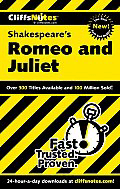
3/24/26 – – Concerned about the advance of generative AI in education, teachers are comparing ChatGPT and other large language models to CliffsNotes, a low-tech learning shortcut popular with students before the internet.
If you didn’t understand a word of Hamlet, couldn’t care less what Captain Ahab was chasing, or didn’t have the attention span to read To Kill a Mockingbird, CliffsNotes summaries could get you through class discussion. Cheating is probably too harsh a term, but you sure didn’t want your English teacher to see you with one of those yellow and black booklets.
The fear was that skipping the actual text, avoiding its nuance, complexity, emotion and character development, would stifle critical thinking. Offloading cognitive activity would also delay if not destroy the joy that comes from intellectual discovery. Experiencing unique language and great storytelling builds a lifelong love of reading and learning.
Today’s generative AI platforms dwarf the capabilities and dangers of CliffsNotes. In a recent Phys.org essay titled “The greatest risk of AI in higher education isn’t cheating—it’s the erosion of learning itself,” University of Massachusetts philosophy professor Nir Eisikovits and ethics researcher Jacob Burley observe:
“Cognitive psychology has shown that students grow intellectually through doing the work of drafting, revising, failing, trying again, grappling with confusion, and revising weak arguments. This is the work of learning how to learn.”
Will Convenience Triumph Over Curiosity?
Worries about the intellectual impact of AI — let’s call it CliffsNotes anxiety — go well beyond the classroom. What if AI makes deep human thought optional? And what does this all mean for corporate communicators?
Some very smart people have been grappling with these questions for a while. Back in November 2024 The Atlantic writer Matteo Wong warned in “AI Is Killing the Internet’s Curiosity” about the unintended consequences of AI turning search engines into answer engines:
“The rabbit holes and the unexpected obsessions are what’s beautiful about searching the internet . . . falling into clutter and treasure, all the time, without ever intending to. AI search may close off these avenues to not only discovery but its impetus, curiosity.”
In his New Cartographies newsletter, bestselling author Nicholas Carr places our fears in perspective. Asking the question, “Is Google Making Us Stupid,” he points out that predictions of doom have accompanied every breakthrough in the evolution of communication:
“In Plato’s Phaedrus, Socrates bemoaned the development of writing. He feared that, as people came to rely on the written word as a substitute for the knowledge they used to carry inside their heads, they would, in the words of one of the dialogue’s characters, ‘cease to exercise their memory and become forgetful’. . . He couldn’t foresee the many ways that writing and reading would serve to spread information, spur fresh ideas, and expand human knowledge (if not wisdom).”
AI Makes Human Communicators More Important than Ever
So, what can corporate communicators do to productively channel and compete with AI?
One promising strategy is to think like the best teachers you were lucky enough to have. How did they convince you to put down the CliffsNotes and actually read Romeo and Juliet? What did they do to make you prefer the hard work of discovering you own paths to knowledge over the convenience of accepting someone else’s instant answers?
And most important, remember the feeling you had for the first time when a book, play, poem or motion picture moved you to tears or laughter; when you said to yourself, “this author or actor is speaking to me.” Why did young readers have no interest in CliffsNotes summarizing the Harry Potter series? The level of reward and human connection they experienced reading J.K Rowling’s stories could never be duplicated by CliffsNotes.
Great teachers, like great communicators, grab their audience’s attention with great content and delivery. When you write for your website or a social media post, you’re not writing War and Peace. But your objective should be to create compelling content, presented in a format both AI and human readers will find interesting, meaningful, helpful: Special enough to have them want to hear from you directly, not blow by you in a search.
Don’t fall into the trap of asking AI to be your CliffsNotes, turning your messaging and its delivery into homogenized, derivative, forgettable slop. Embrace this opportunity to be more important than ever to your company’s success.
Humans are destined to win this battle, just like the best teachers, authors, performers and students were never seriously threatened by the millions of CliffsNotes hidden in book bags and backpacks.
 Crisis Quotient Blog