Effectively Communicating Change Requires Respect and Caring for Existing Customers
8/30/25 – – Now that Cracker Barrel has wisely given its old logo a reprieve, here’s my take on what really caused this self-inflicted reputational crisis and how they can recover.
There’s been plenty of criticism of the company’s logo redesign and updates to its restaurant interiors. That’s to be expected. Announcements of any new marketing or merchandising direction prompt passionate expressions of personal taste.
Two additional factors heightened public interest and customer disapproval: 1) the allegation, propagated on social media, that these changes were driven more by a woke political agenda than by business considerations; and 2) the related perception among loyal Cracker Barrel customers that company management no longer appreciates or respects them.
I believe it’s the second factor – – a common pitfall I call brand betrayal – – that temporarily tanked Cracker Barrel’s stock value, creates the hardest obstacle to recovery, and threatens the job security of CEO Julie Masino.
Will You Still Love Me Tomorrow?
A cardinal rule in marketing and crisis prevention is, “Love the customers you have.” Never take them for granted. They’ll support you through hard times. If they feel betrayed, however, it’s hard to get them back.
I’ve written many times on this blog about the care required to effectively communicate change. Efforts to attract new customers without showing plenty of understanding, respect and love for existing customers almost always end in failure:
- In the late 1980s, Oldsmobile launched its “This is not your father’s Oldsmobile” ad campaign in an effort to attract younger buyers. The catchy phrase insulted the brand’s base customers, failed to interest the next generation of drivers, and ultimately killed the brand.
- Earlier this year, WW International (formally known as Weight Watchers) filed for Chapter 11 bankruptcy protection. The company, which for decades stood for dietary discipline, self-control and group support, acquired a subscription telehealth platform in 2023 offering obesity medications like Ozempic. Being offered the choice to substitute pill power for will power, WW’s core customers felt abandoned and fled.
- And famously in 2023, Bud Light lost its place as America’s favorite beer when a tone-deaf marketing campaign designed to broaden consumer appeal was interpreted by loyal customers as gratuitous criticism of their character and lifestyle.
I’m Not the Customer They Want
What was it that made existing customers read so much into and be so offended by the Cracker Barrel rebranding? Here’s one clue: On the company’s website, under the heading “20 Surprising Facts About Cracker Barrel,” you find this statement:
“This year we even unveiled a brand-new logo! Rather than just showing one person, we wanted to feature lots of people. The idea was to celebrate the diversity of all our guests with a logo that represented our continued passion for pleasing people of all races, colors, and genders.”
Wow. That’s a lot of responsibility to hang on a logo. Especially at a time when political and societal tensions are so raw.
As CEO Masino made her media rounds defending the rebranding, she used similar language that created the impression (fair or not) that in the past the intended message of Cracker Barrel’s logo (with the down-home guy sitting next to a barrel) was to not welcome people of all races, colors, and genders. In investor communications she emphasized the importance of “our strategic transformation plans to drive relevancy.”
This well-meaning marketing speak unintentionally led loyal fans to conclude: “I see where all this is coming from. They’re embarrassed about who they are. I’m not the customer they want. Maybe I need another place to bring my family for dinner.”
I Didn’t Know You Cared
Apologizing to customers for the clumsy rebranding rollout, the company said this:
“If the last few days have shown us anything, it’s how deeply people care about Cracker Barrel.“
Did it really take this reputational storm for management to understand how much their customers loved them? If so, that tells us a lot about what went wrong and what’s required to earn back trust.
The company’s decision to reverse the logo decision was a good first step. Now Cracker Barrel’s most important crisis-recovery task is to demonstrate that this is no longer a relationship of unrequited love.
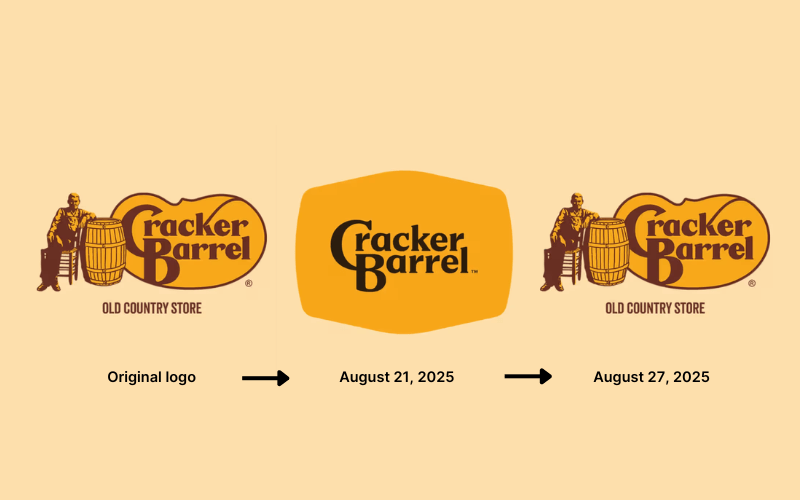
Illustration from The Branding Journal
UPDATE – – 9/10/25 – – Cracker Barrel announced that it had discontinued its store design update program in response to customer feedback.
UPDATE – – 10/3/25 – – Cracker Barrel announced that it is no longer working with the company that assisted with the development of its short-lived new logo and store update designs.
 Crisis Quotient Blog